How to Make Yemeni Coffee at Home: Traditional & Modern Brewing Methods
Yemeni coffee has a long history, but you don't need to travel to Yemen to experience it.
With freshly roasted Yemeni coffee, the right grind, good-quality water, and a suitable brewing method, you can prepare a flavorful cup at home and explore the distinctive character of one of the world's most historic coffee origins.
So, how do you make Yemeni coffee at home?
The answer depends on the type of cup you want.
You can prepare Yemeni coffee using modern methods such as pour over, French press, and Moka pot, or explore traditional Yemeni preparations that incorporate spices and the country's distinctive coffee culture.
At Yemen Specialty Coffee (YSC), we recommend starting with a 1:15 coffee-to-water ratio and water around 90–96°C, then adjusting the recipe based on your brewing method and personal taste.
What Makes Yemeni Coffee Different?
Before brewing Yemeni coffee, it helps to understand what makes the coffee itself distinctive.
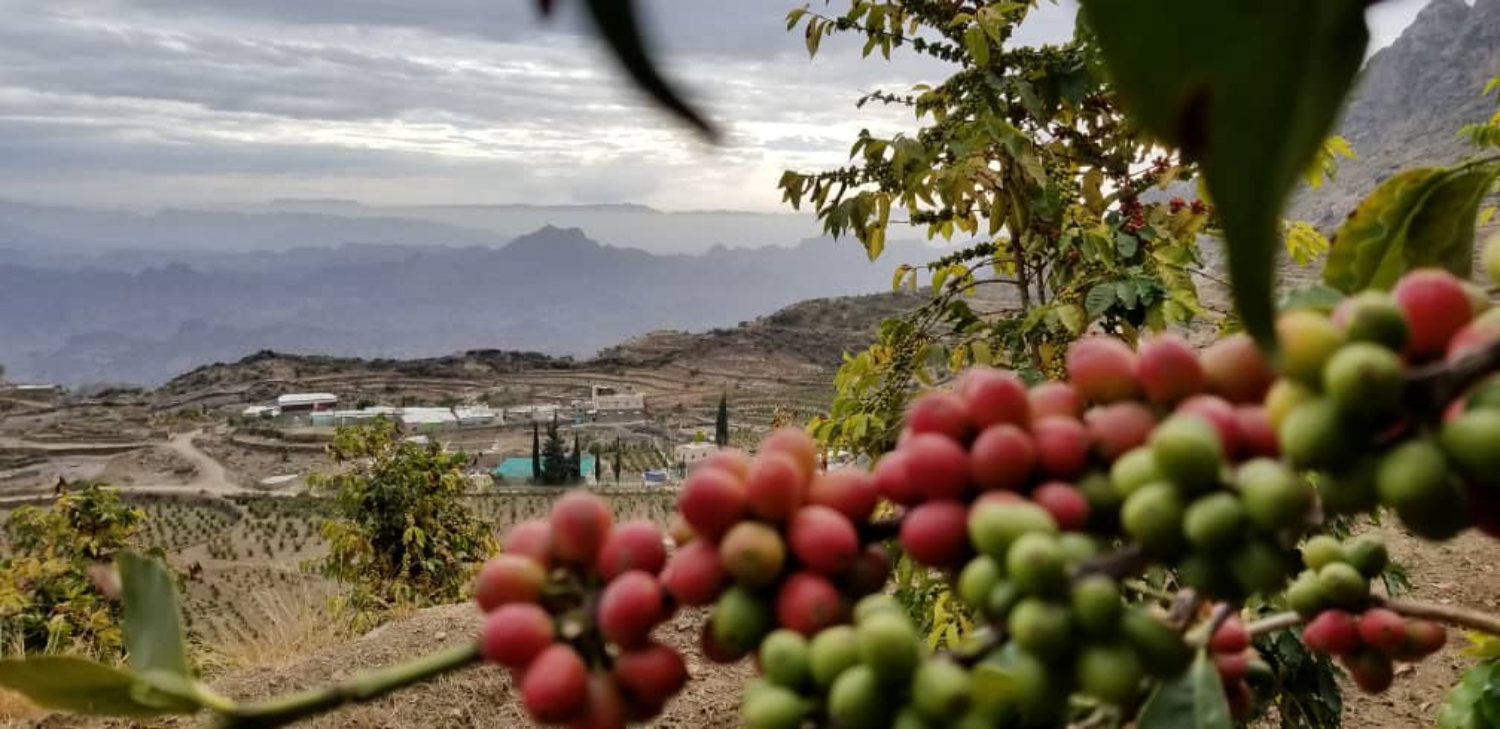
Yemeni coffee is grown primarily by smallholder farmers in mountainous regions of Yemen. Traditional farming and processing practices remain important to the coffee's identity.
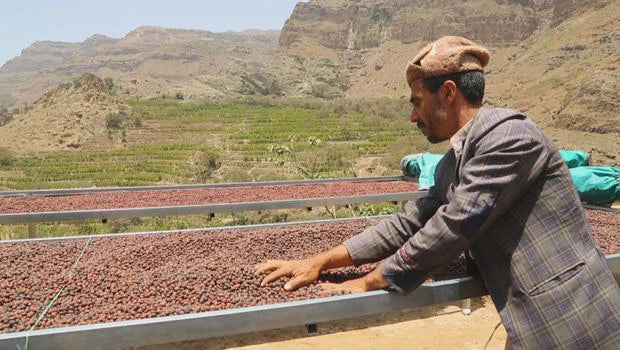
At Yemen Specialty Coffee, we work directly with Yemeni farmers in remote mountain villages where coffee is naturally sun-dried using traditional methods.
The coffee cherries are dried in the sun, including on farmer rooftops, before the beans are prepared for export and roasting.
This natural processing can contribute to the complex fruit, chocolate, spice, and wine-like characteristics often associated with Yemeni coffee.
Because of this complexity, your brewing method can have a significant effect on what you experience in the cup.
What You Need to Make Yemeni Coffee
You don't need expensive equipment to make a good cup of Yemeni coffee.
For most brewing methods, you'll need:
- Freshly roasted Yemeni coffee
- Fresh, filtered water
- A coffee grinder
- A scale
- A kettle
- Your preferred brewing device
- A timer
A scale is particularly useful because it allows you to control your coffee-to-water ratio and repeat a recipe that you enjoy.
Start With a 1:15 Coffee-to-Water Ratio
A good starting point for Yemeni coffee is:
1 gram of coffee for every 15 grams of water.
For example:
- 15 g coffee → 225 g water
- 20 g coffee → 300 g water
- 25 g coffee → 375 g water
This isn't a rule you have to follow exactly.
If the coffee tastes too strong, try using slightly more water.
If it tastes too light, increase the amount of coffee or adjust your brewing process.
The goal is to find the ratio that works best for your preferred roast and brewing method.
Step 1: Choose Your Yemeni Coffee Roast
Your roast level will influence the final flavor of your coffee.
YSC offers three Moka Legacy roast levels.
Light Roast
The Moka Legacy Light Roast is bright, fruity, floral, and winey, with lively acidity.
Choose it if you want to explore the more expressive and delicate characteristics of Yemeni coffee.
Recommended starting methods: Pour over or AeroPress.
[Shop Moka Legacy Light Roast]
Medium Roast
The Moka Legacy Medium Roast offers a balanced profile with dark chocolate, dried fruit, and warm spice.
It is a versatile choice for everyday brewing.
Recommended starting methods: Pour over, French press, or drip coffee.
[Shop Moka Legacy Medium Roast]
Dark Roast
The Moka Legacy Dark Roast is bold and full-bodied, with smoky chocolate and a syrupy finish.
Choose it if you prefer a richer and more intense cup.
Recommended starting methods: Moka pot or French press.
How to Make Yemeni Coffee Using Pour Over
Pour over is one of the best methods for exploring the more delicate characteristics of specialty coffee.
It gives you control over water flow, extraction, and brewing time.
What You'll Need
- 20 g Yemeni coffee
- 300 g water
- Pour-over brewer
- Paper filter
- Grinder
- Kettle
- Scale
- Timer
Grind Size
Start with a medium-fine grind.
The exact grind will depend on your brewer, coffee, and brewing time, so adjust it if the coffee tastes under-extracted or over-extracted.
Brewing Steps
- Heat your water to approximately 90–96°C.
- Rinse the paper filter and discard the rinse water.
- Add 20 g of freshly ground Yemeni coffee.
- Begin with a small amount of water to wet the grounds.
- Allow the coffee to bloom.
- Slowly pour the remaining water in controlled stages.
- Allow the water to pass through the coffee.
- Swirl the finished coffee gently before serving.
Pour over is particularly useful for the Moka Legacy Light Roast because the method can highlight its fruity, floral, and wine-like characteristics.
For YSC's detailed pour-over recipe, visit the [Brewing Tips & Recipes] page.
How to Make Yemeni Coffee Using a French Press
French press brewing is a simple way to produce a fuller-bodied cup.
Because the coffee remains in contact with the water for several minutes, the method can emphasize body and richness.
What You'll Need
- 20 g Yemeni coffee
- 300 g water
- French press
- Grinder
- Timer
Grind Size
Use a coarse grind as a starting point.
Brewing Steps
- Heat your water to approximately 90–96°C.
- Add the ground coffee to the French press.
- Pour in the water.
- Make sure all the coffee grounds are saturated.
- Place the lid on the press without pushing the plunger down.
- Allow the coffee to brew.
- Slowly press the plunger.
- Pour immediately to prevent over-extraction.
French press works particularly well if you enjoy a fuller-bodied cup and can be a good match for the Medium or Dark Roast.
How to Make Yemeni Coffee Using a Moka Pot
The Moka pot creates a concentrated, rich coffee that can be a great match for darker roast profiles.
What You'll Need
- Yemeni coffee
- Fresh water
- Moka pot
- Grinder
- Stove
Grind Size
Use a medium-fine grind.
Avoid grinding the coffee as fine as espresso because excessive resistance can affect the brewing process.
Brewing Steps
- Fill the lower chamber with water according to your Moka pot's capacity.
- Add ground Yemeni coffee to the filter basket.
- Level the grounds without compacting them.
- Assemble the Moka pot.
- Place it over medium heat.
- Allow the coffee to flow into the upper chamber.
- Remove the Moka pot from the heat when the coffee has finished flowing.
- Stir the brewed coffee before serving.
The concentrated character of Moka pot coffee pairs especially well with the Moka Legacy Dark Roast.
How to Make Traditional Yemeni Coffee
Traditional Yemeni coffee preparation can be different from modern specialty coffee brewing.
Yemeni coffee culture includes preparations that use spices and ingredients that reflect the country's culinary traditions.
One particularly well-known ingredient is Hawaij, a Yemeni spice blend that can be used in coffee.
Depending on the recipe, Hawaij may contain spices such as:
- Cardamom
- Ginger
- Cinnamon
- Cloves
- Other warming spices
The exact blend can vary.
Spiced Yemeni coffee offers a very different experience from a modern pour-over because the spices become part of the beverage's flavor profile.
If you want to explore this style, YSC's [Brewing Tips & Recipes] page provides more information about Yemeni coffee and Hawaij.
How Much Coffee Should You Use?
The amount of coffee depends on how much you want to brew.
Using a 1:15 coffee-to-water ratio, you can use 15 g of coffee with 225 g of water, 20 g with 300 g of water, 25 g with 375 g of water, or 30 g with 450 g of water.
You can adjust this ratio based on your preferred strength and brewing method.
Remember that "stronger" coffee can mean either a more concentrated brew or simply a more intense flavor profile.
Changing the coffee-to-water ratio affects concentration, while roast level and extraction affect the flavor and character of the cup.
What Grind Size Should You Use?
Grind size should match your brewing method.
As a general starting point:
Pour Over: Medium-fine
French Press: Coarse
Moka Pot: Medium-fine
If your coffee tastes sour, sharp, or thin, it may need more extraction.
If it tastes bitter, dry, or overly harsh, it may be over-extracted.
Small grind adjustments can make a noticeable difference.
What Temperature Should You Use?
YSC recommends starting with water between 90–96°C.
Water that is too hot can contribute to harsh or bitter flavors, while water that is too cool may produce a weak or under-extracted cup.
The ideal temperature can also vary depending on the roast.
If you're brewing a lighter roast, you may prefer the higher end of the range.
For darker roasts, experimenting toward the lower end may help produce a smoother cup.
How to Make Yemeni Coffee Taste Better
If your coffee doesn't taste the way you expected, don't immediately blame the beans.
Try adjusting one variable at a time.
If the coffee tastes too sour
Try:
- A slightly finer grind
- A longer brew time
- Slightly hotter water
If the coffee tastes too bitter
Try:
- A slightly coarser grind
- A shorter brew time
- Slightly cooler water
If the coffee tastes too weak
Try:
- More coffee
- Less water
- A finer grind
If the coffee tastes too strong
Try:
- More water
- Slightly less coffee
- A coarser grind
Keeping everything else consistent while changing one variable at a time makes it easier to understand what works.
How Fresh Should Yemeni Coffee Be?
Freshness matters for all specialty coffee.
YSC roasts its coffee on demand, helping ensure that customers receive freshly roasted coffee rather than coffee that has been sitting on a shelf for an extended period.
After opening your coffee, store the beans in an airtight container away from heat, moisture, light, and strong odors.
Avoid storing coffee in the refrigerator unless you have a specific storage method designed to prevent moisture and odor absorption.
For the best experience, grind your beans shortly before brewing.
Can You Make Yemeni Coffee Without Special Equipment?
Yes.
You don't need a specialized Yemeni coffee maker to enjoy Yemeni coffee.
A simple French press, pour-over brewer, or Moka pot can produce an excellent cup.
If you don't have a grinder, freshly ground coffee is preferable to coffee that has been ground long before brewing.
The most important factors are good-quality coffee, fresh water, an appropriate grind, and a consistent brewing process.
Try Yemeni Coffee at Home
Making Yemeni coffee at home doesn't have to be complicated.
Start with fresh Yemeni specialty coffee, use a 1:15 coffee-to-water ratio, keep your water around 90–96°C, and choose a brewing method that matches the flavor you enjoy.
Then experiment.
Try Light Roast with pour over.
Try Medium Roast with a French press.
Try Dark Roast with a Moka pot.
And if you want to explore Yemeni coffee culture more deeply, try a traditional spiced preparation using Hawaij.
The best part of brewing specialty coffee is discovering what you enjoy.
Explore Moka Legacy and bring the character of Yemeni coffee into your own kitchen.
[Shop Yemeni Specialty Coffee]
Frequently Asked Questions
How do you make Yemeni coffee?
Yemeni coffee can be prepared using several methods, including pour over, French press, Moka pot, and traditional spiced preparations. Start with a 1:15 coffee-to-water ratio and water around 90–96°C, then adjust according to your brewing method.
What is the best way to brew Yemeni coffee?
There is no single best method. Pour over is excellent for exploring bright and delicate flavors, French press produces a fuller-bodied cup, and Moka pot creates a concentrated and rich brew.
What temperature should I use for Yemeni coffee?
A good starting range is 90–96°C. You can adjust the temperature depending on the roast and your preferred flavor.
What is the best roast for Yemeni coffee?
It depends on your taste. Light Roast is bright and fruity, Medium Roast is balanced with chocolate, dried fruit, and spice, while Dark Roast is bold, full-bodied, and rich.
What coffee-to-water ratio should I use?
Start with approximately 1:15. For example, use 20 grams of coffee with 300 grams of water. Adjust the ratio based on how strong you prefer your coffee.
Can I make Yemeni coffee in a French press?
Yes. French press is a good way to prepare Yemeni coffee when you want a fuller-bodied cup. Medium and Dark Roasts can work particularly well with this method.
Can I make Yemeni coffee in a Moka pot?
Yes. A Moka pot produces a concentrated and rich cup that pairs particularly well with Medium and Dark Roast Yemeni coffee.
What is Hawaij?
Hawaij is a traditional Yemeni spice blend used in different culinary preparations. A coffee version can include warming spices such as cardamom, ginger, cinnamon, and cloves. Recipes and blends can vary.
How should I store Yemeni coffee beans?
Store whole beans in an airtight container in a cool, dry place away from direct sunlight, heat, moisture, and strong odors. Grind the beans shortly before brewing for the freshest flavor.
Where can I buy Yemeni specialty coffee?
Yemen Specialty Coffee offers Moka Legacy Yemeni specialty coffee in Light, Medium, and Dark Roast options, roasted on demand and available online.
Explore Moka Legacy and brew Yemeni coffee your way.