Article: What Makes Yemeni Coffee Unique? A Guide to Yemen's Specialty Coffee
What Makes Yemeni Coffee Unique? A Guide to Yemen's Specialty Coffee
Yemeni coffee has a character unlike almost any other coffee in the world. Known for its complex flavors, traditional farming practices, and deep connection to coffee's history, coffee from Yemen has become increasingly sought after by specialty coffee drinkers.
But what makes Yemeni coffee different?
The answer goes beyond the beans themselves. Yemen's mountainous growing regions, small-scale farming traditions, natural processing methods, and centuries-old coffee heritage all contribute to the distinctive character found in the cup.
At Yemen Specialty Coffee (YSC), we work directly with Yemeni coffee farmers and roast micro-lot specialty coffee to help bring this unique origin to coffee drinkers in the United States and Canada.
Yemen's Historic Connection to Coffee
Yemen has played an important role in the development of coffee as a global beverage.
Coffee was brought to Yemen from neighboring Ethiopia, but Yemen became one of the earliest places where coffee was cultivated commercially and exported to the wider world. The historic port of Mokha, also spelled Mocha or Moka, became closely associated with the coffee trade and gave its name to the coffee that traveled through the port.
For centuries, Yemen was at the center of the early global coffee trade.
That history is the inspiration behind YSC's Moka Legacy coffees.
The name Moka Legacy honors the connection between Yemen's coffee-growing heritage and the historic port through which Yemeni coffee reached consumers far beyond the Arabian Peninsula.
What Makes Yemeni Coffee Different?
There isn't just one reason Yemeni coffee tastes different. Several characteristics of the origin work together.
1. Coffee Grows in Yemen's Mountainous Terrain
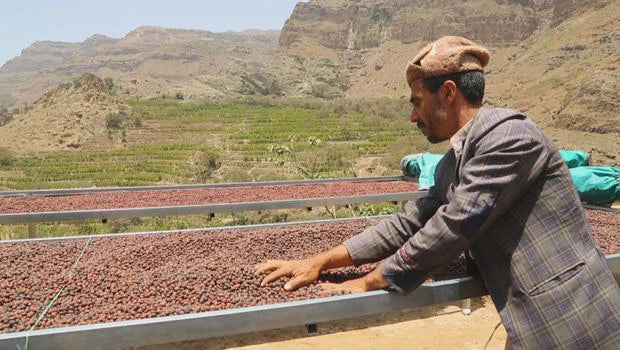
Much of Yemen's coffee is grown by smallholder farmers in mountainous areas where agriculture is challenging.
Coffee farms can be found on steep terraces and in highland villages, where farmers have cultivated coffee for generations.
These conditions make Yemeni coffee production very different from the large-scale, mechanized farming found in many major coffee-producing countries.
YSC works with farmers in remote mountain villages where coffee continues to be grown and processed using traditional methods.
The result is coffee that reflects its origin rather than a highly standardized commodity product.
2. Yemeni Coffee Is Traditionally Naturally Processed
One of the most recognizable characteristics of Yemeni coffee production is its traditional natural processing.
Instead of removing the fruit from the coffee cherry immediately after harvesting, the whole coffee cherry is dried with the fruit still surrounding the seed.
In Yemen, coffee cherries are traditionally dried in the sun, including on rooftops and other drying surfaces. This method is well documented in specialty coffee from Yemen.
YSC's coffee follows this traditional approach.
The farmers YSC works with naturally sun-dry coffee cherries on rooftops in Yemen's mountain villages.
This slow drying process helps create the intense fruit character and complexity that many coffee drinkers associate with Yemeni coffee.
3. Yemeni Coffee Has a Distinctive Flavor Profile
Yemeni coffee is often recognized for its complexity rather than a single dominant flavor.
Depending on the coffee and roast, you may encounter flavors associated with:
- Dried fruit
- Berries
- Chocolate
- Wine-like fruit character
- Warm spices
- Floral notes
- Cocoa
- Rich sweetness
Specialty coffee sources commonly describe Yemeni coffees as fruit-forward, complex, and often naturally processed, with flavors that can include dried fruit, chocolate, spice, and wine-like characteristics.
This is one reason Yemeni coffee can be such an interesting origin for specialty coffee drinkers.
Rather than tasting like a generic cup of coffee, a well-prepared Yemeni coffee can have multiple layers of flavor that develop as the cup cools.
4. Small-Scale Farming Preserves the Character of the Origin
Yemeni coffee production is largely based on smallholder farming rather than enormous commercial plantations.
That means individual farmers and farming communities play an important role in growing, harvesting, drying, and processing the coffee.
For YSC, maintaining direct and long-term relationships with Yemeni coffee farmers is an important part of the business.
YSC is a micro-lot green coffee importer and roaster focused on sourcing authentic Yemeni specialty coffee through direct relationships with farmers.
The goal isn't simply to sell coffee from Yemen.
It is to help preserve the connection between the farmer, the origin, and the final cup.
5. Traditional Rooftop Drying Is Part of the Coffee's Story
One of the most visually distinctive parts of Yemeni coffee production is rooftop drying.
After harvesting, coffee cherries can be spread out in the sun to dry naturally. In Yemen, rooftop drying is a traditional part of coffee processing, particularly in mountainous farming communities.
At YSC, this traditional process is central to the Moka Legacy story.
The coffee is naturally sun-dried before being imported and roasted for customers.
This isn't simply a marketing detail.
The processing method has a direct relationship with the flavor of naturally processed coffee because the coffee seed dries while surrounded by the fruit.
6. Yemeni Coffee Is Specialty Coffee With a Sense of Place
Specialty coffee is about more than a high price or an attractive package.
It is about quality, traceability, careful production, and understanding where the coffee came from.
YSC focuses on micro-lot Yemeni coffee and describes its coffees as organic specialty coffee sourced through direct relationships with Yemeni farmers.
The company also has its coffee evaluated and roasted fresh to order.
This approach allows the natural character of the origin to remain central to the coffee.
What Does Yemeni Coffee Taste Like?
One of the best ways to understand Yemeni coffee is to taste it across different roast levels.
Yemen Specialty Coffee offers three Moka Legacy roast profiles:
Light Roast
The Moka Legacy Light Roast highlights brighter characteristics of the coffee.
Expect a profile that can be:
- Fruity
- Floral
- Winey
- Bright
- Lively
This roast is a good starting point for coffee drinkers who enjoy expressive, fruit-forward specialty coffee.
[Shop Moka Legacy Light Roast]
Medium Roast
The Medium Roast provides a more balanced profile.
Its flavor profile includes characteristics of:
- Dark chocolate
- Dried fruit
- Warm spice
- Balanced sweetness
It can be a versatile choice for everyday brewing.
[Shop Moka Legacy Medium Roast]
Dark Roast
The Dark Roast brings out a deeper, fuller character.
Its profile is:
- Bold
- Full-bodied
- Rich
- Smoky chocolate
- Syrupy in finish
It is a natural choice for coffee drinkers who prefer a richer and more intense cup.
Why Is Yemeni Coffee Worth Trying?
If you normally drink coffee from major commercial origins, Yemeni coffee can be an entirely different experience.
Its appeal comes from the combination of:
Origin — coffee grown in Yemen's mountainous farming communities.
Tradition — generations of coffee cultivation and processing knowledge.
Natural processing — whole coffee cherries dried naturally in the sun.
Small-scale farming — coffee produced by individual farmers and communities.
Complex flavor — fruit, floral, chocolate, spice, and wine-like characteristics can appear in the cup.
Fresh roasting — YSC roasts its coffee on demand to preserve freshness and flavor.
Together, these characteristics create a coffee that is deeply connected to its place of origin.
How Should You Brew Yemeni Coffee?
Yemeni specialty coffee can be prepared using several brewing methods.
Pour-over is an excellent option when you want to explore the coffee's more delicate flavors and aromas.
A French press can produce a fuller-bodied cup and highlight the coffee's richness.
A Moka pot is another option for people who enjoy a concentrated and bold cup.
YSC recommends starting with a coffee-to-water ratio of approximately 1:15, using water around 90–96°C, and adjusting the grind and brewing time according to your preferred method.
For detailed brewing instructions, see YSC's [Brewing Tips & Recipes].
What Makes Moka Legacy Different?
Moka Legacy was created to honor Yemen's coffee heritage.
At Yemen Specialty Coffee, the focus is on preserving the connection between:
Yemeni farmers → traditional processing → specialty coffee → fresh roasting → your cup.
Every batch is roasted on demand, allowing the coffee to be shipped fresh while respecting the natural profile of the origin.
For YSC, coffee is more than a product.
It is a way to connect today's coffee drinkers with a history that began centuries ago.
Experience Yemeni Specialty Coffee
Yemeni coffee offers something that is increasingly difficult to find in modern coffee: a strong sense of place.
The mountains, farming communities, traditional processing, and history all contribute to the identity of the coffee.
Moka Legacy was created to help preserve and share that identity.
Whether you prefer the bright character of a Light Roast, the balance of a Medium Roast, or the richness of a Dark Roast, you can experience Yemeni specialty coffee in a roast that matches your taste.
Explore the Moka Legacy collection and discover coffee with history in every cup.
[Shop Yemeni Specialty Coffee]
Frequently Asked Questions
What is Yemeni coffee?
Yemeni coffee is coffee grown in Yemen, particularly in the country's mountainous growing regions. It is known for traditional smallholder farming, natural processing, and complex flavor profiles.
What does Yemeni coffee taste like?
Yemeni coffee can have flavors of dried fruit, berries, chocolate, floral notes, warm spices, and wine-like fruit characteristics. The exact profile depends on the coffee, processing, roast, and brewing method.
Is Yemeni coffee naturally processed?
Much of Yemen's specialty coffee is naturally processed, meaning the coffee cherries are dried whole before the coffee seeds are separated from the dried fruit. Rooftop and sun-drying are traditional practices in Yemen.
What is Moka coffee?
Moka refers to coffee historically associated with the Yemeni port of Mokha (Mocha), which played a major role in the early international coffee trade. The term later became associated with Yemeni coffee more broadly.
Which Yemeni coffee roast should I choose?
Choose Light Roast if you enjoy bright, fruity, floral flavors. Select Medium Roast if you prefer a balanced combination of chocolate, dried fruit, and spice. Choose Dark Roast if you enjoy a bold, full-bodied cup with rich smoky chocolate characteristics.
Where can I buy Yemeni specialty coffee?
Yemen Specialty Coffee offers freshly roasted Moka Legacy Yemeni coffee in Light, Medium, and Dark Roast options, available online for coffee drinkers in the United States and Canada.
Discover Moka Legacy and experience Yemeni specialty coffee for yourself.